Midterm Report: The sniffer and emulator for COM components

08 Jul 2011 Youzhi Bao capture-hpc gsoc

By now, what I have done for Capture-HPC is:

    1. Write a Mock Capture Server.

This is to help dubugging and coding the Capture client. According to the message format defined in ealier Capture, the mock server will send an command to client firstly and then keep listening to client’s log.

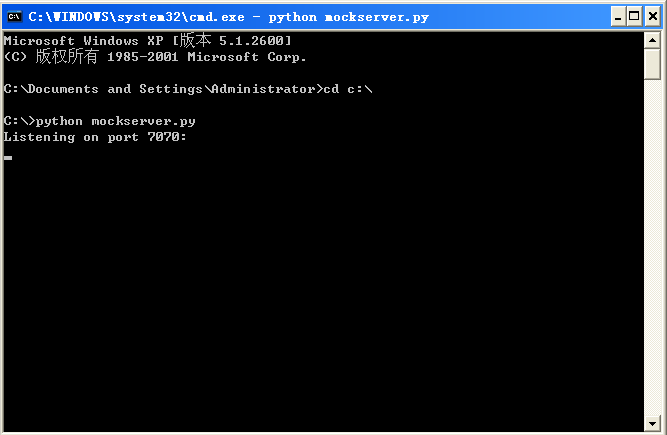
After the server’s working, we can start the Capture Client. The command is same as the earlier beta, although I updated the client code, which changes the way that invoke an IE process.
DroidBox: testing with Geinimi sample

22 Jun 2011 Patrik Lantz android droidbox dynamic-analysis gsoc sandbox

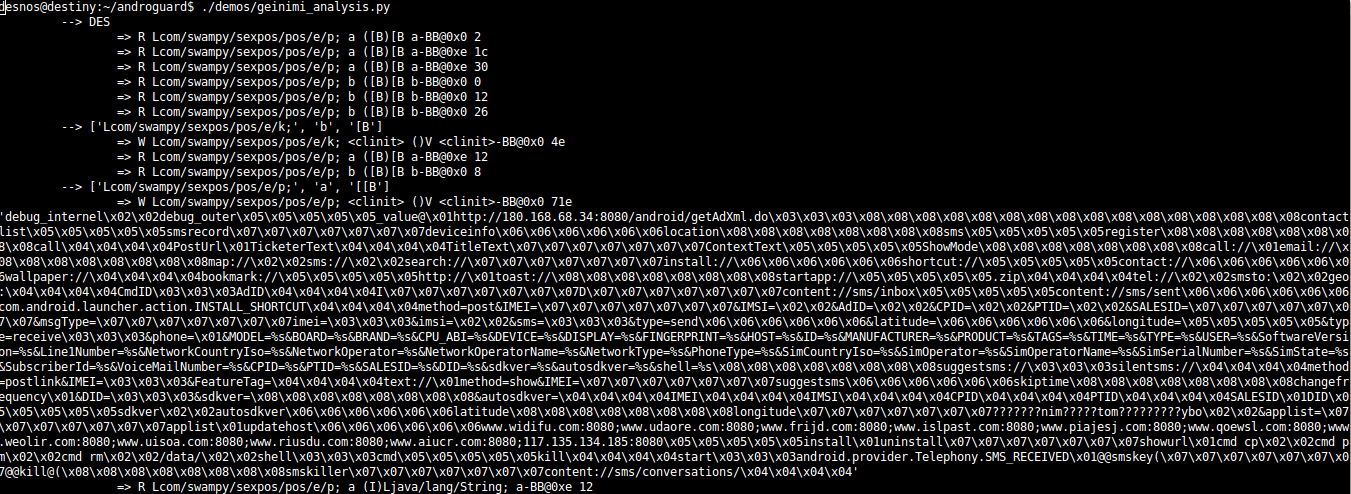
One of the very first Android malwares, Geinimi has been analyzed in the application sandbox DroidBox that is currently being developed. The project is part of GSoC 2011 in collaboration with Honeynet and as a master thesis. The Geinimi application uses DES encryption, and it’s possible to uncrypt statically the content, see picture below.

But it’s very easy to do that because the key is not well hidden, so an approach by using dynamic analysis will be more interesting with complex samples. This first real-world sample analysis was carried out to specifically test the crypto API logging.

GSoC2011-THP Project 1 - Improve our high interaction client honeypot Capture-HPC

05 May 2011 Youzhi Bao capture-hpc gsoc

Project Description:
Proposed Capture-HPC Description

Capture-HPC is a high-interaction client honeypot that is capable of seeking out and identifying client-side attacks. It identifies these attacks by driving a vulnerable client to open a file or interact with a potentially malicious server. As it processes the data, Capture-HPC monitors the system for unauthorized state changes that indicate a successful attack has occurred. It is regularly used in surveys of malicious websites that launch drive-by-download attacks.

Google SoC 2011 - Student Applications In Progress

04 Apr 2011 David Watson gsoc

With GSoC 2011 student applications having been open for the past week, we’ve been having a number of interesting discussions with potential students on both #gsoc2011-honeynet on irc.freenode.net and on our public GSoC mailing list and this summer is already looking to have many exciting project ideas.

Student applications run through to Friday April 8th at 19:00 UTC, so if you are a student interested in participating in GSoC 2011 with the Honeynet Project, please take a look at our GSoC 2011 project ideas and make the most of the remaining time to get involved. We cover a very wide range of projects, tools and technologies, so hopefully there is something available to interest everyone, whatever their experience.

Google SoC 2011 - Honeynet Project Accepted Again and Student Applications Open!

26 Mar 2011 David Watson gsoc

Our annual workshop in Paris got off to the perfect start this weekend when Google went live with the new look GSoC 2011 Melange site and announced which lucky organizations had been accepted as mentoring orgs for GSoC 2011.

The Honeynet Project were delighted to have been successful again this year and to have been accepted as one of 173 organizations who will be mentoring GSoC 2011 student projects this summer! Many thanks go to Google for their continued support for FOSS (particularly the ever supportive Carol), and to all our members and potential students for their interest, support and enthusiasm so far.

Google SoC 2011 - Org Applications Finished

12 Mar 2011 David Watson gsoc gsoc-gsoc2011

23:00 UTC Friday March 11th was the first deadline for Google Summer of Code 2011, and the cut off point for organizations interesting in participating to complete their org application.

I’m very pleased to confirm that the Honeynet Project have once again applied. Whilst we now patiently wait for Google to announce which organizations will be selected to participate on March 18th, interested prospective students can start looking at our our initial GSoC 2011 project ideas and find more information about getting involved with the Honeynet Project and Google Summer of Code 2011 here - including contact details for email and IRC. Please feel free to get in touch if you have any questions or project ideas.

Google Summer of Code 2011 - Org Applications Open

06 Mar 2011 David Watson gsoc

Has it really been another year already? Having really enjoyed our experience as a successful mentoring organization in Google Summer of Code 2009 and Google Summer of Code 2010, The Honeynet Project is very pleased to announce that we will once again be applying to be accepted this year as a potential mentoring organization for Google Summer of Code 2011 (note the changed URL for GSoC 2011).

The first GSoC 2011 deadline is Friday March 11th, which is the deadline for interested organizations to submit their org application. Currently we are reviewing our GSoC 2011 project ideas internally and prospective students will soon be able to see our list of proposed project ideas here. If we are accepted this year by Google, as usual all of our GSoC 2011 information will be available at /gsoc on our main public website.

Know Your Tools: Qebek - Conceal the Monitoring has been published

05 Nov 2010 Jianwei Zhuge gsoc kye kyt white-paper

Christian Seifert (CPRO of The Honeynet Project) has just announced publication of our Know Your Tools series: Qebek - Conceal the Monitoring, authored by Chengyu Song and Jianwei Zhuge from the Chinese Chapter and Brian Hay from the Alaskan Chapter. The paper is based on Chengyu’s hard work during the GSoC 2009, Brian Hay and me acted as his mentors for the Qebek GSoC Project. Congrats to Chengyu and Chinese Chapter.

TraceExploit: Replaying method dissection

17 Aug 2010 Zhongjie Wang exploit-replay gsoc traceexploit

I’ve been working on the GSOC Project 14 in recent months. We are meant to start a new tool which can replay the collected exploit traces.

We know that during the process of exploit replay, there’re many fields need to be changed in the original application messages. Some of them are platform independent, and the others are platform specific. Platform-independent variables are those changed each time we exploit, like timestamp, cookie, length, etc. And platform-specific variables are those changed only if the target system is changed, like target address, return address point to the shellcode.